Sunday, August 6, 2017

Where am I going,
Have I gone too far...
Have I lost my mind.

No Blogging in 4 years...


That's insane.


Friday, February 22, 2013

JWT 100 Things to watch for 2013

For the third year in a row, I've added this to the TT blog post. It's a insightful look into the trends for 2013. What should we be on the lookout for. Here's 100 tasty ideas that might be ripe for harvest. If your business, like mine, feels like it's in a centrifuge, you'll find this informative and maybe even necessary to ward off extinction. 


http://www.slideshare.net/jwtintelligence/jwt-100-things-to-watch-in-2013?ref=http://www.jwtintelligence.com/2013-and-beyond/

Friday, September 28, 2012

Companies going to lots more in a shorter message!

New project... PDQ Doors has been uploading videos for their newly renovated website. Before its over, we'll have over 15 short clips on products, troubleshooting, and various landing pages. Here's a sample video of one of the brief product descriptions.

Friday, October 28, 2011

Things to watch in 2011

JWT shared what we should watch for in 2011... We'll comment on there predictions in the next post.

Thursday, October 6, 2011

How do you go about changing the world...


Perhaps the most influential person in my lifetime. When we look back at some of the greatest innovators...Edison, Bell, Ford, Salk, Disney - you've got to include Steve Jobs on that list. Some of his contributions... the proliferation of the Windows drop-down Navigation, The Mouse, Imacs, Ipods, Itunes, Pixar, Iphones, and the latest enchantment...Ipad.

Here's a few soundbites into his genius...


Answering his critics with the essence...


The Apple Brand


The Crazy Ones...


A Tribute

Tuesday, June 7, 2011


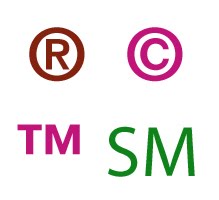
About Trademarks and Copyrights

TM vs. SM vs. ® vs. © Copyright © laws protect ownership of things like music, writing, artwork, photographs, and other "original works of authorship." Copyright protection is automatic and may last for over 100 years. However, not everything can be copyrighted, and some copyrights expired prior to 1976 laws. The "circle-c" mark has been "optional" since the 1970s, but is properly used with a date and identification of the author/owner. Under the Digital Millennium Copyright Act, it is a federal crime to remove or alter a copyright notice when you're making copies, regardless of whether the copies are lawful or not. Trademark laws protect "words, names, symbols, sounds, or colors that distinguish goods and services from those manufactured or sold by others and to indicate the source of the goods. Trademarks, unlike patents, can be renewed forever as long as they are being used in commerce." Unregistered trademarks are a bit harder to enforce than registered, but last as long as they are being used. Trademarks may be registered in states or countries or both. The (TM) symbols for TM and SM are completely optional and require no registration. However, there are advantages to having a state or federal trademark registration, including the fact that it will tell others when you first used your brand, which can be important in priority disputes. Valuable marks justify getting professional advice.

To learn more - and there is a LOT of info - check out the United States Patent and Trademark Office Home Page (their glossary is a good place to start) and the U.S. Copyright Office in the Library of Congress. Check out video library (http://www.uspto.gov/trademarks/process/TMIN.jsp) Here is more input: Depending on your local state laws, trademark registrations have different lifespans and can either be renewed or not. If a trademark is registered it is only registered for a certain period of time and then the owner decides to renew it or not. As long as you continue using a trademark, and were the first to use it, you can enforce it in state or federal courts, whether or not it is now or has ever been registered in a state or federal proceeding. Most state copyright laws were preempted by federal laws passed in the 1970s, but may still be important on certain types of works, such as "sound recordings" made prior to the changes.

There is also a "circle-P" mark on some older phono records, meaning they are covered by an international phonograph duplication treaty. The © copyright notice and ® registration mark have nothing to do with state registrations. Any time you claim rights in a trademark, you may use the "TM" (trademark on goods) or "SM" (service mark) designation to alert the public to your claim, regardless of whether you have filed an application with the state or USPTO. However, you may use the federal registration symbol "®" only after the federal USPTO actually issues a registration, and not while an application is pending or after registration expires. Also, you may use the registration symbol with the registered mark only on or in connection with the goods and/or services listed in the federal trademark registration. Any major change to the mark or the goods/services will require another registration. Federal registrations require periodic maintenance fees (i.e., every 10 years).

Creative Commons


You may have seen a new circled double cc notation accompanying content on the web, in video, or print.

Creative Commons is a balance within traditional “all rights reserved” settings that copyright law creates. Creatve Commons tools give content creators, companies and institutions a streamlined, standardized way to grant copyright permission to their content and work. The combination of creative commons tools allows users a vast digital commons, and a pool of content that can be copied, distributed, edited and built upon, within the auspice of copyright law. Below are a brief listing of CC licenses.


The Licenses

  • Attribution
    CC BY

    This license lets others distribute, remix, tweak, and build upon your work, even commercially, as long as they credit you for the original creation. This is the most accommodating of licenses offered. Recommended for maximum dissemination and use of licensed materials.

    View License Deed | View Legal Code

  • Attribution-ShareAlike
    CC BY-SA

    This license lets others remix, tweak, and build upon your work even for commercial purposes, as long as they credit you and license their new creations under the identical terms. This license is often compared to “copyleft” free and open source software licenses. All new works based on yours will carry the same license, so any derivatives will also allow commercial use. This is the license used by Wikipedia, and is recommended for materials that would benefit from incorporating content from Wikipedia and similarly licensed projects.

    View License Deed | View Legal Code

  • Attribution-NoDerivs
    CC BY-ND

    This license allows for redistribution, commercial and non-commercial, as long as it is passed along unchanged and in whole, with credit to you.

    View License Deed | View Legal Code

  • Attribution-NonCommercial
    CC BY-NC

    This license lets others remix, tweak, and build upon your work non-commercially, and although their new works must also acknowledge you and be non-commercial, they don’t have to license their derivative works on the same terms.

    View License Deed | View Legal Code

  • Attribution-NonCommercial-ShareAlike
    CC BY-NC-SA

    This license lets others remix, tweak, and build upon your work non-commercially, as long as they credit you and license their new creations under the identical terms.

    View License Deed | View Legal Code

  • Attribution-NonCommercial-NoDerivs
    CC BY-NC-ND

    This license is the most restrictive of our six main licenses, only allowing others to download your works and share them with others as long as they credit you, but they can’t change them in any way or use them commercially.

    View License Deed | View Legal Code

Tuesday, April 12, 2011

12 Mind Blowing Facts That Every Marketer Should Know About The Web!


From HubSpot -

It's no secret that the marketing landscape has changed dramatically over the past few years as social and mobile technologies have gone from early-adopter novelties to mainstream essentials.

Still, there are plenty of traditional marketing stalwarts out there who aren't buying all of the social media hype or can't convince their boss or marketing team to experiment in the brave new world of inbound marketing.

So we've rounded up a dozen powerful stats that are sure to be eye-openers, if not total mind-changers.

1. 78% of Internet users conduct product research online.
That means your website stands a good chance of being a prospect's "first impression." That also means your new business card isn't a business card—it's Google.

2. In the past year, Web-based email usage dropped a staggering 59% among 12-17 year olds, who prefer to communicate via text, instant messaging, and social networks.
If 12-17 year olds aren't your primary customers, you may think, "So what? They're just kids." But web-based email usage has been on the decline among ALL Internet users under the age of 55. And by the way, today's kids are tomorrow's customers—and they're probably not going to be reading your email.

3. 78% of business people use their mobile device to check email.
So that means pretty much everybody that can check email on a mobile device, does. Is your email newsletter optimized for mobile devices?

4. 40% of US smartphone owners compare prices on their mobile device while in-store, shopping for an item.
Is your business website optimized for mobile devices? If not, you may be missing out on hundreds of sales opportunities.

5. 200 Million Americans have registered on the FTC's "Do Not Call" list.
That's 2/3 of the country's citizens. The other 1/3, I'm guessing, probably don't have a home phone anymore.

6. 91% of email users have unsubscribed from a company email they previously opted-in to.
We're getting savvier with technology and less patient with unwanted solicitations. And it's just so easy to hit 'delete'.

7. 84% of 25-34 year-olds have left a favorite website because of intrusive or irrelevant advertising.
Frankly, I'm surprised this stat doesn't read "100%" and apply to a much wider age range.

8. 57% of businesses have acquired a customer through their company blog.
Finally, some good news! Blogging is good. Intrusive ads are bad. See how simple it is?

9. 41% of B2B companies and 67% of B2C companies have acquired a customer through Facebook.
If this stat doesn't poke a hole in the "Facebook is not useful for B2B companies" myth, I don't know what will.

10. The number of marketers who say Facebook is “critical” or “important” to their business has increased 83% in just 2 years.
That's right—critical or important. When a channel generates not only leads, but real revenue, you can't call it "experimental" any longer.

11. Companies that blog get 55% more web traffic.
The more you blog, the more pages Google has to index, and the more inbound links you're likely to have. The more pages and inbound links you have, the higher you rank on search engines like Google—thus the greater amount of traffic to your website. Which is why we repeat: Blogging is good.

12. Inbound marketing costs 62% less per lead than traditional, outbound marketing.
That's right—62% less. The average outbound lead costs $373. The average inbound lead costs $143. And as we love to say around here, "if it don't make dollars, it don't make sense." Outbound marketing just don't make sense anymore.

You can find sources to all of the above stats along with a boatload more eye-popping facts, figures, and how-to's in the presentation embedded below or you can join us next week each and every day at 12pm EST for a very special edition of HubSpotTV where we'll share hundreds of tips (and give away dozens of awesome prizes!) in celebration of Marketing Transformation Week.

Monday, March 21, 2011

Who's Securing Your Surfing?


Informative little piece about the way that you are being eavesdropped on when sitting at your computer. Who's watching, why are they watching, how are they watching? And what does all this watching mean to you. I've got to admit, I don't really think about it too much, and I suppose I should be more anxious about the way this may effect my security, my shopping habits, what goods people have on me.

Take a look for yourself and let me know what you think.

Thursday, February 24, 2011

Facebook - The Numbers Are Astronomical!

Latest numbers on Facebook... It continues to grow exponentially. One out of 12-13 on the planet earth now participate in Facebook...(is that possible?)

The World Is Obsessed With Facebook from Alex Trimpe on Vimeo.

Tuesday, February 22, 2011

Digital changing the game for authors and publishing...

Digital changing the game for authors and publishing


This is a clip from Novelist Brett Easton Ellis on how Digital is changing everything about authoring novels and publishing.

"And also the idea of a book costing not $25 anymore but $10 means you're also wiping away a lot of the cost of making a book. You know, the printing, the shipping, et cetera. And so the royalty rates for authors are shifting as well. So it's not as authors are necessarily going to lose money on their work in terms of people like buying to download them. The royalty rate is actually going to be the same, if not more, because they're cutting out all those other costs. So that can be a good thing as well."

When you ponder the massive change taking place - the reinventing of publishing and even storytelling...it's both wondrous and daunting.

I personally do not own a tablet myself, but I think about them almost daily. It's probably the next purchase on the tech "wishlist." Around my house there's well over 1000 books, which I've read maybe a hundred of... but, if I could collect them all in a folder... on a shelf in their own section of the digital wing --- who knows--- I might just clear out a few hundred square feet of living space, and put in a new workbench, or gym or something!

Friday, February 4, 2011

Hubspot Video on Changing Face of Email Marketing


A very nice synopsis of the changing face of email marketing, inbound vs. outbound marketing...and other things that you should consider about your digital message.


1. Cultivate Your House List

When you ask people to sign up for your newsletter, you are cultivating your house email list. When someone opts in to receive updates about your offers and special promos, you are cultivating your house list. “It is a list you work to build over a long period of time,” said Karen. And you know what? Your house list performs better than the vast majority of your other email marketing tools. It enjoys a high adoption rate and provides high ROI, so make sure you leverage that channel and expand it further.

2. Forget About List Rental

Renting lists is not only expensive, but also ineffective. The return on investment from rented lists is much lower than that of house lists, about 10-15%. It is a marketing approach that is less inbound and more interruptive. That is why if you engage in renting lists, you risk losing your reputation as a trust agent and becoming notorious for spamming people who didn’t formally opt in.

3. Focus on Lead Nurturing Instead

Instead of purchasing lists, consider focusing more on lead nurturing campaigns. Lead nurturing is the practice of sending event-triggered emails to a specific segment. You launch these by targeting email subscribers based on their recent conversion events. For instance, if someone visits your luggage eCommerce site and downloads a report about flying in times of tight security control, you can follow up with a luggage checklist for secure travel.

4. Optimize for Mobile

The consumption of email on mobile devices is only going to increase. Get ready for this by optimizing your messages for mobile viewing. Avoid tables and large images in your email templates. Accoridng to MarketingSherpa's 2010 report, 67% of people do not display images by default in their email system. Also, try to build shorter copy where the call to action is at the very top.

5. Build Social Authority

buildsocialauthorityGmail’s Priority Inbox gives you a quick preview of the role social media will play in email marketing. Your company’s authority will be tied to your presence on social media channels (and to the relationships you have with people on those channels). As Karen said in her presentation, “The ‘spam’ filter is now social.” The key to keeping up with these developments is to build social authority. Experiment with adding a follow-me module in your email communication and allow people to share you offers on social media.


Friday, January 14, 2011

11 Social Web Facts That Will Blow Your Mind

Hubspot Facts on Social Media - Posted by Kipp Bodnar

1. In 2010, 107 trillion emails were sent on the Internet. (Source)

2. At the current rate 36 billion photos will be uploaded to Facebook each year. (Source)

3. Each day 2 billion videos are watched on YouTube. (Source)

4. Each month 30 billion pieces of content (links, notes, photos, etc.) are shared on Facebook. (Source)

5. In 2010, users sent 25 billion tweets. (Source)

6. Worldwide there are 1.97 billion Internet users. (Source)

7. At the end of 2010, there were 88.8 million – .COM domain names registered. (Source)

8. As of December 2010, there were 255 million websites. (Source)

9. Worldwide, there are 2.9 billion email accounts. (Source)

10. The average Internet user watched 186 online videos per month (USA). (Source)

11. Every minute 35 hours of video is uploaded to YouTube. (Source)


Monday, November 22, 2010

Our state of debt in the U.S..."When Does the Madness End"

Report on the state of the United States Public Debt

The United States has had public debt since its inception. Debts incurred during the American Revolution and under the articles of confederation led to the first yearly reported value of $75,463,476.52 on January 1, 1791. Over the following 45 years, the debt grew, briefly contracted to zero on January 8, 1835 with President Andrew Jackson but then quickly grew into the millions again.

The first dramatic growth spurt of the debt occurred because of the Civil War. The debt was just $65 million in 1860, but passed $1 billion in 1863 and had reached $2.7 billion following the war. The debt slowly fluctuated for the rest of the century, finally growing steadily in the 1910s and early 1920s to roughly $22 billion as the country paid for involvement in World War I.

The buildup and involvement in World War II social programs during the F.D. Roosevelt and Truman presidencies in the 1930s and '40s caused a sixteenfold increase in the gross debt from $16 billion in 1930 to $260 billion in 1950.

After this period, the growth of the gross debt closely matched the rate of inflation where it tripled in size from $260 billion in 1950 to around $909 billion in 1980. Gross debt in nominal dollars quadrupled during the Reagan and Bush presidencies from 1980 to 1992. The Public debt quintupled in nominal terms.

In nominal dollars the public debt rose and then fell between 1992 and 2000 from $3T in 1992 to $3.4T in 2000. During the administration of President George W. Bush, the gross debt increased from $5.6 trillion in January 2001 to $10.7 trillion by December 2008, rising from 58% of GDP to 70.2% of GDP. The lack of fiscal responsibility and policies will burden our next generations in ways that we currently cannot comprehend. Under the Obama administration, the madness continues… We observe that since starting in March 2009, the Congressional budget office estimated that gross debt will rise from 70.2% of GDP in 2008 to 100.6% in 2012.

Our economy and middle class will continue to erode until there will only be two classes, the haves…and the have nots. This "spend first and ask questions later" form of government continues to mathematically bury Americans and cover over its sins with each new graduating class. Just look at the last set of numbers in the paragraph above…It’s estimated that the gross debt is equally to the gross national product of our nation. And that debt is no longer sponsored by fellow Americans and North American Banks and investors…that debt is serviced by our world competitors, and enemies.

There are Biblical comparisons that can be made to this sort of hysteria and poor decisions. Around the Christmas table, the conversation will again be sobering…as we get closer and closer to our destiny as a debtor nation. I hope I’m wrong, but I hear those Pied Pipes leading us closer and closer to rushing waves…They’re getting louder and louder every day.

Year

Gross Debt in Billions undeflated[10]

as % of GDP

Debt Held By Public ($Billions)

as % of GDP

1910

2.6

unk.

2.6

unk.

1920

25.9

unk.

25.9

unk.

1928

18.5[11]

unk.

18.5

unk.

1930

16.2

unk.

16.2

unk.

1940

50.6

52.4

42.8

44.2

1950

256.8

94.0

219.0

80.2

1960

290.5

56.0

236.8

45.6

1970

380.9

37.6

283.2

28.0

1980

909.0

33.4

711.9

26.1

1990

3,206.3

55.9

2,411.6

42.0

2000

5,628.7

58.0

3,409.8

35.1

2001

5,769.9

57.4

3,319.6

33.0

2002

6,198.4

59.7

3,540.4

34.1

2003

6,760.0

62.6

3,913.4

35.1

2004

7,354.7

63.9

4,295.5

37.3

2005

7,905.3

64.6

4,592.2

37.5

2006

8,451.4

65.0

4,829.0

37.1

2007

8,950.7

65.6

5,035.1

36.9

2008

9,985.8

70.2

5,802.7

40.8

2009

12,311.4

86.1

7,811.1

54.6

2010 (2 Nov)

13,724.0

93.2 (3rd Q)

9,133.6

62.0 (3rd Q)

The startling numbers and indicators reveal our lack of leadership by decision makers today.

(under Presdient George Bush alone, the debt doubled by 5 trillion dollars in just 8 years, with the help of President Obama, that figure is up an addional 40% tipping out at just under 14 trillion dollars, expected to be 100% of GDP before he leaves office in 2012)

Thursday, November 18, 2010

SEO Mistakes - Mark Nunny's 12 Common Mistakes

Mark Nunney's 12 most common SEO mistakes: SEO expert series
by Rachelle Money, 12 November 2010


Have you ever embarked on some SEO work and got that sinking feeling that you might be doing something wrong? You're not alone. Our expert Mark Nunney gives us the dirty dozen top mistakes he sees being made in SEO, as well as tips on how to negotiate the pitfalls.

1. Missing the big picture

Most SEO advice is given for a single page, word or technique. But if a site is to be responsible for a profitable small business then in most situations it will need hundreds of pages targeting hundreds of thousands of keywords using a wide range of techniques.

All of these pages, keywords and techniques need to work together so you need a plan to coordinate that, including:

• Keyword research looking for potential keywords with Wordtracker Keywords Tool and existing traffic with Wordtacker Strategizer)

• Strategy (your prioritized groups of target keywords)

• Site structure (matching your target keywords) and navigation to distribute link power around your site

• On page SEO

• Link building with Wordtracker’s new Link Builder tool and online PR.

To work at any scale beyond a micro-niche business, you must change your perspective from single (or exact match) keywords to keyword niches – groups of keywords sharing the same seed ...

... so right now I’m helping a site selling slippers and I might focus a lot of SEO and link building on the single keyword slippers but I’m really interested in tens of thousands of keywords containing slippers, including leather slippers, men’s slippers, ladies slippers, etc.

I designed Wordtracker Strategizer to work with this shift in perspective from single keywords to keyword niches.

2. Not having a keyword or SEO strategy

What are you trying to achieve? Most importantly your SEO strategy should serve the company, marketing and brand strategies. A keyword strategy is a prioritized list of the company’s target markets' niches, as defined by the keywords used in those niches - the words and phrases used in search engines.

3. Putting too much trust in an SEO company

You need to get whoever you have approached to prove what they've done, even when you have a personal reference for that company. You should take a step back and ask yourself, "what is being delivered?" Make sure you are getting your money's worth.

Often they (businesses) will see a company with a nice website and they may be inclined to trust them because of that. Here are a few simple questions to ask any agency you might be talking to:

• Do you always give complete ownership of site analytics accounts to your clients? If not, why not? (The answer is they want to ‘lock you in’.)

• How do you build links other than paid, directories, press releases, article sites and using your own websites?

• Can you list all the link building techniques you have planned for me, give the weighting you’ll give to each and why?

• Give examples of how your strategy and tactics might change with circumstances.

• If their given link building techniques include the likes of comment spamming and buying links ask: I understand they can work now, but what happens when Google stops them working?

• (Following up on the question above) Remember the Florida update? If the person you’re speaking to doesn’t remember 'Florida', ask to speak to an SEO who does.

4. Having a company structure or systems that are unable to accommodate change

Change is always difficult. But combine it with something completely new and you’ve got a problem. The new thing is SEO and online marketing - neither is particularly well understood or even trusted, and in some cases companies have never heard of it.

Change is never going to happen unless those with authority and responsibility absolutely insist it does. This slows down many large companies and allows the small, who do embrace SEO, to do well. Here’s a nice example - do a search for hotels in London, Paris or New York. You would think you would see all the big names at the top, but you’ll see plenty of companies you’ve never heard of.

5. Not coordinating SEO with your editorial, sales and marketing departments

New content without SEO to maximize the number of target visitors seeing that content is a waste.

SEO without marketing to convert those visitors is a waste.

Your content, SEO and marketing should work together as part of a process.

6. Not monitoring response or acting on results

You have to monitor response eg, the numbers buying your product or signing up to your newsletter.

You may find that the market niche you hoped would work ends up being lame. If so, move on.

Monitor traffic, rankings and response for relevant searches. If you are getting good or bad results you need to act appropriately. That might be moving on to the next target niche, or investing more resources into the same ones.

7. Poor content management systems

It’s a cliché to say you need the right tools to do the job. One of SEO and online marketing’s tools is a content management system (CMS) that gives you complete control over most of the content, on most of the pages, including site navigation, menus and all marketing. Not having that is like entering a car race on a scooter.

8. Letting developers control website content

Partly as a result of companies having no existing knowledge and systems to accommodate online marketing and SEO, those who build the website have by default often become in charge of its content.

But letting developers take control of online content is like letting the mechanic drive the racing car. Or buying a car from a Ford garage and letting the mechanics decide where you can drive.

Take control of your website.

The developer's job is to deliver the functions you want and keep the site working. What goes on the site and where and when is the responsibility of editorial and marketing, including SEO.

9. Not doing SEO now

Here’s a simple point; every day you wait to start SEO means it will be more expensive to get the same results when you do start. If you can get to the top of Google for a collection of keywords this will give you momentum and help you stay at the top, and it becomes cheaper.

Serious search engine success allows for serious business success - put these things together and you’ve basically got a gold rush. If you don’t do the work now it’s going to cost you a fortune to do it in the future. There is a simple reason for this and it’s inbound links.

10. Neglecting the importance of site structure and navigation

Most reasonable sites for reasonably sized businesses are going to need hundreds (sometimes thousands) of pages.

If you have hundreds of pages you need an optimized site structure and an accompanying site navigation. Even on a small site it’s possible to get this wrong and waste all your work.

You might have wonderfully optimized pages and links but if you don’t have your navigation right, or your structure isn’t right then your success will be limited.

What should you do? It’s hard to give a quick answer, but you should organize your site content into categories of related content. Let’s say you had a site selling chocolate - you would have all your Belgian truffles in one place and chocolate cake recipes somewhere else, almost working as different sites with their own home page (category home pages.)

On larger sites, related categories can be grouped together into channels.

Make sure your home page links directly to your site’s most important category pages. See Are your Superman Pages trapped in a basement full of kryptonite?

11. Neglecting your home page

Your home page is by far your most powerful page because most of your site’s inbound links will come to there. Use that power with copy to both target your toughest keyword niches and help other niches with links to their category home pages.

You can test what works, trying keywords of varying degrees of difficulty and ambition.

12. Over-relying on your home page

This is just as problematic. There are only so many different keywords you can effectively target with one page. When success is achieved for a keyword niche with your home page – move that success to other pages using internal and external links.

Updated on 12 November 2010, this post was first published on 26 June 2008.